

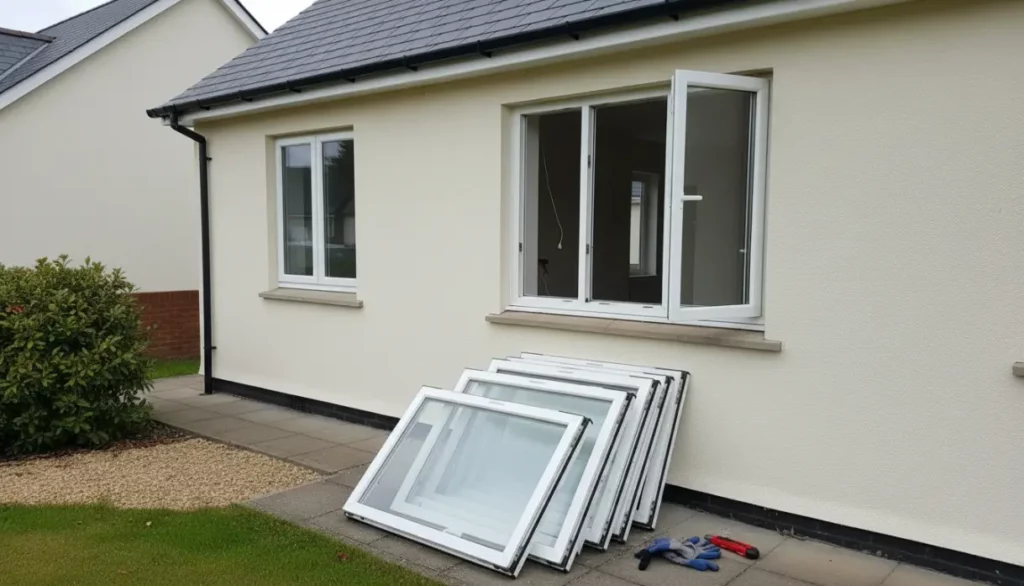
Replacing uPVC windows is one of those jobs where most of the attention goes on the new product: the profile, the glazing spec, the colour, the price. The old windows, by contrast, tend to be an afterthought. You know they need to come out, but what actually happens next? Where do old uPVC window frames go, and who is responsible for getting rid of them? These are practical questions that trip up a lot of homeowners, particularly those sourcing supply-only and handling removal themselves.
This post covers the removal process in straightforward terms, explains what your options are for disposing of old windows and frames, and sets out how uPVC recycling works in the UK. Whether you are managing the removal yourself or coordinating a trade installer, understanding what is involved helps you plan the job properly and avoid unnecessary disposal costs.
Why Old uPVC Windows Cannot Simply Go in the Bin
uPVC, or unplasticised polyvinyl chloride, is a durable material. That is largely why it became the dominant choice for UK window frames over the past four decades. It does not rot, warp, or corrode. But that same durability creates a disposal challenge: uPVC does not break down in landfill, and standard household waste collections do not accept window frames.
The glass units within double glazed windows present a separate issue. Sealed glazing units are manufactured as a single component, with the cavity between panes filled with argon or another inert gas. They cannot be separated and placed in a domestic recycling bin. The glass itself is recyclable, but it needs to go through the correct waste stream to get there.
In practice, this means old uPVC windows and doors require one of three outcomes: collection by a licensed waste carrier, delivery to a local household waste recycling centre that accepts them, or collection by a specialist uPVC recycling scheme. The good news is that uPVC is one of the most recyclable construction materials available, and the UK glazing industry has infrastructure in place to handle it.
How to Remove Old uPVC Windows Safely
Removing old uPVC windows is a manageable task for a competent DIYer or trade installer, but it does require a methodical approach. Rushing the removal risks damaging the surrounding brickwork, breaking the glazing unit, or dropping a heavy frame from height. The process is broadly the same across casement, tilt and turn, and fixed window types.
Remove the glass first. This reduces the overall weight and gives better access to the fixing screws hidden behind or beneath the glazing. Use a glazing chisel or a bead removal tool to release the plastic glazing beads. Remove the two vertical side beads first, then the bottom bead, and finally the top bead. Once the beads are out, lift the glazing unit clear using a suction cup lifter, which reduces the risk of dropping the glass and avoids putting pressure on the edges.
Cut the sealant. With the glass removed, the frame fixings become accessible. Before attempting to move the frame, cut through the silicone sealant around the perimeter using a Stanley knife.
Remove the frame fixings. uPVC window frames are typically secured to the reveal with screws driven through the inner frame, or via metal brackets that sit behind the frame face. If the frame does not release after the visible fixings are removed, it may be held by expanding foam or hidden metal brackets. A reciprocating saw or hacksaw blade can cut through stubborn fixings.
Protect the brickwork when prying. Use a scrap piece of wood or metal as a fulcrum when prying the frame to protect the surrounding brickwork from damage.
What to Do With Old uPVC Windows: Your Disposal Options
Once removed, you have several practical options for disposing of old uPVC windows and frames.
How uPVC Window Recycling Works in the UK
uPVC is one of the most recyclable materials used in construction. Unlike many plastics, uPVC can be recycled multiple times without significant loss of quality, which makes it well suited to a closed-loop recycling model.
The recycling process typically involves separating the glass from the frame, then processing the uPVC frames through specialist machinery. The old frames are broken down and ground into small pellets, which are then melted and remoulded into new products. Recycled uPVC pellets may be used in new window profiles, pipe manufacturing, or other construction materials. The glass component follows a separate route, typically back into the glass manufacturing stream.
The FENSA window recycling scheme is one of the recognised routes for diverting old window and door frames from landfill in England and Wales. Participating installers collect frames during the fitting process and ensure they reach the correct recycling facility. If you are appointing an installer to fit your new windows, it is worth asking whether they participate in a recognised recycling scheme.
The environmental case for proper recycling is clear. Every tonne of uPVC recycled reduces demand for virgin material and keeps plastic out of landfill. For homeowners replacing windows across an entire property, that can represent a meaningful reduction in waste.
Measuring for Your Replacement uPVC Windows
If you are removing your old uPVC windows yourself, the removal phase is also the point at which you take final measurements for your new frames. Getting the measurements right matters: windows ordered from Window Supply Direct are made to your exact dimensions and cannot be exchanged once manufactured.
Measure from the outside of the property, taking the overall width and height from brick to brick. Then deduct 10mm from each dimension to allow for fitting tolerances. This gives you the frame size to order. If you are removing a frame that sits within a sub-frame or reveal lining, measure the internal opening instead. Take measurements at multiple points to account for any variation in the opening.
Supply-Only vs Supply-and-Fit: What Changes for Disposal
| Consideration | Supply-and-Fit Model | Supply-Only via Window Supply Direct |
|---|---|---|
| Who removes the old windows | The fitting company, as part of the contract | Your chosen installer, separately contracted |
| Who disposes of old frames | Typically the fitting company (check contract) | Your chosen installer or your own arrangement |
| Waste transfer documentation | Installer's responsibility | Installer's responsibility (confirm with them) |
| Cost of disposal | Often included in the quoted price | Agreed directly with your installer |
| Recycling scheme access | Dependent on the installer's practices | Dependent on your installer's practices |
When a Supply-and-Fit Model May Be the Right Choice
Supply-only is not the right route for every homeowner. There are situations where a fully managed supply-and-fit contract may be the more practical option.
- You have no existing relationship with a trade installer and are not confident in sourcing, vetting, and contracting one independently.
- The property has unusual or complex openings that require significant structural work alongside the window replacement.
- You want a single point of accountability for the entire job, including removal, disposal, installation, and any remedial brickwork.
- You are replacing windows in a listed building or conservation area where the specification needs to be managed carefully alongside planning requirements.
If any of these apply, the pricing premium of a supply-and-fit model may reflect genuine value. For straightforward replacement jobs across standard openings, supply-only typically offers a significant cost saving.
Frequently Asked Questions
Remove the glass first to reduce weight, then cut around the silicone sealant with a Stanley knife before attempting to move the frame. When prying the frame out, place a scrap piece of wood or metal between your tool and the brickwork to protect the wall surface from damage.
The core tools are a glazing chisel or bead removal tool, a suction cup lifter for the glazing unit, a Stanley knife for cutting sealant, a screwdriver for fixing screws, and protective gloves and safety goggles. If the frame is held by stubborn expanding foam or hidden fixings, a reciprocating saw or hacksaw blade may also be needed.
Your options include your local household waste recycling centre (most accept uPVC frames and glass units), a licensed waste carrier arranged through your installer, or a specialist uPVC recycling scheme. Check your local council website to confirm what your nearest HWRC accepts before making a trip.
Yes. uPVC is one of the most recyclable construction materials in use, and UK glazing industry schemes exist specifically to divert old frames from landfill. The recycling process breaks down old frames into pellets that are then remoulded into new products, including new uPVC profiles.
For a standard replacement in an existing opening, a straightforward DIY removal could take a couple of hours per window. Removing the frame from the masonry may take three to four hours depending on the fixing method and your experience level. A trade installer typically works faster, particularly across multiple windows in a single visit.
For supply-only orders, you can take measurements before removal by measuring brick to brick from outside and deducting 10mm for tolerances. If you are not confident in your pre-removal measurements, final measurements taken once the old frame is out will give you the most accurate opening size.
The FENSA scheme is associated with the registration and certification of window and door installations in England and Wales. Participating installers can access recycling routes for old frames, helping to divert uPVC and glass from landfill. Ask your installer whether they use a recognised recycling scheme as part of their removal process.
Under Approved Document L for England and Wales, replacement windows in existing dwellings are required to achieve a whole-window U-value of 1.4 W/m²K or better. Standard double glazed units from Window Supply Direct typically achieve around 1.2 to 1.3 W/m²K, which meets and in most cases exceeds this requirement.
See What Your Replacement Windows Cost Without the MarkupWindow Supply Direct supplies made-to-measure uPVC windows and doors direct from UK manufacturers, with no showrooms, sales reps, or middlemen. Prices are available online without providing personal details.